
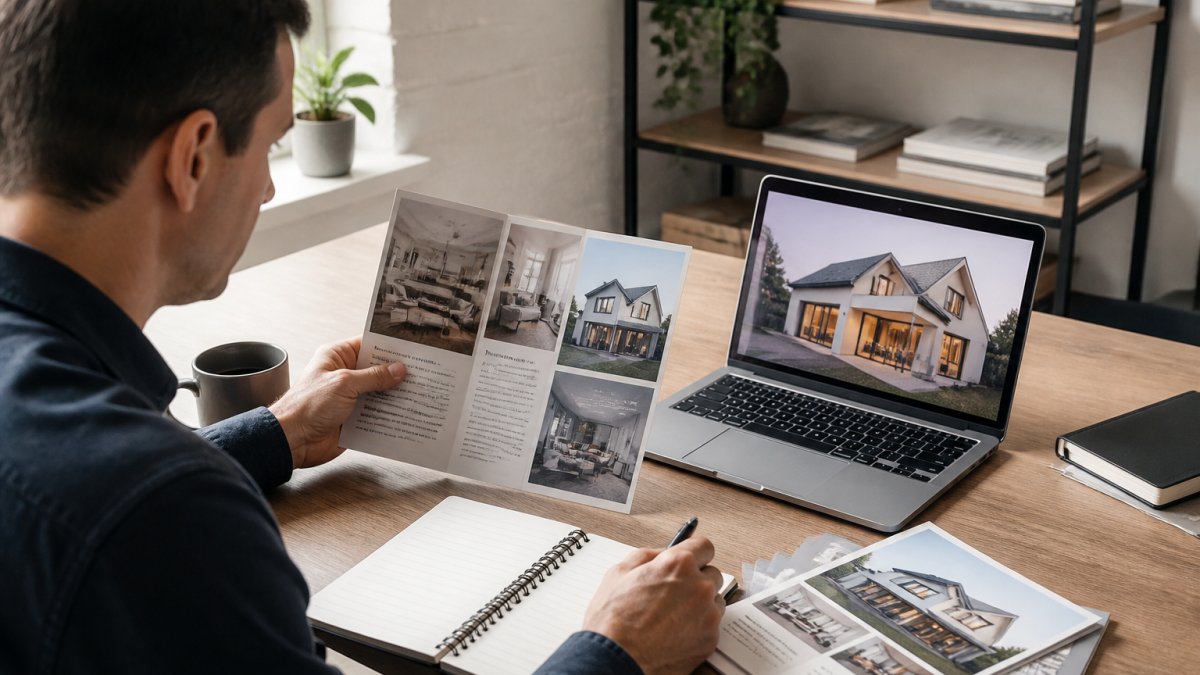
 ultimate-guide
What Is a Brochure Website? A Guide for Small Businesses
Table of Contents
- What Is a Brochure Website?
- Key Features of a Brochure Website
- Real-World Brochure Website Examples
- Brochure Website Pros and Cons
- Brochure Website vs E-Commerce Website
- Is a Brochure Website Right for Your Business?
- Getting Started with Your Brochure Website
- Frequently Asked Questions
Last Updated: October 21, 2026
What Is a Brochure Website?
A brochure website is a digital storefront that presents your business, services, and value proposition to potential customers without direct e-commerce functionality. It's designed to inform visitors about who you are, what you do, and how to contact you, much like a printed brochure, but online and interactive.
Unlike e-commerce platforms that process transactions, a brochure website converts browsers into leads through contact forms, phone calls, email enquiries, and appointment bookings. For service-based businesses, property firms, hospitality venues, and professional practices, this distinction matters enormously. Your website isn't selling products directly; it's selling trust, credibility, and the next conversation.
At ITWizrd, we specialise in crafting bespoke, high-conversion professional websites designed specifically for small businesses across Glasgow, Paisley, and the wider UK, turning casual visitors into qualified enquiries. The difference between a template-based site and a bespoke brochure website is stark. Custom-built sites reflect your brand identity precisely, integrate with your specific business processes (like booking systems for hospitality), and are optimised to convert your exact audience into action.

A brochure website typically includes: your company story, service or product descriptions, team information, testimonials, a contact page, and sometimes a blog or resource section. The goal is straightforward: educate the visitor enough that they trust you enough to reach out.
Key Features of a Brochure Website
The best brochure websites share specific structural and functional elements that drive conversions. These aren't optional extras, they're the mechanics that turn interest into action.
Clear value proposition appears immediately. Within seconds of landing, visitors should understand what you do and why it matters to them. A vague headline like "Welcome to our site" accomplishes nothing. A specific one, "We design custom websites that convert visitors into paying customers", tells the story instantly.
Professional design signals credibility. This doesn't mean flashy or complex. It means clean layouts, consistent branding, readable typography, and images that reflect your actual business. Many small businesses underestimate this. A dated or cluttered website tells prospects you don't invest in your own brand, so why should they invest in you?
Strong calls-to-action guide visitors toward the next step. Whether it's "Request a Quote," "Book a Consultation," or "Call Us Today," these buttons or links should appear multiple times throughout the site, not just at the bottom. Visitors who find value in your content but can't easily find how to contact you will leave and call your competitor instead.
Mobile responsiveness is non-negotiable. Most visitors browse on phones. If your brochure website doesn't display perfectly on mobile, you've lost them before they've even read your headline.
Fast loading speed keeps people engaged. Research shows that visitors abandon websites that take more than a few seconds to load. A brochure website should be lean and optimised, no unnecessary animations or bloated code slowing things down.
Trust-building elements like testimonials, case studies, certifications, and client logos reassure prospects that you deliver results. A visitor reading testimonials and case studies is more likely to contact you than one seeing nothing but your claims.
Real-World Brochure Website Examples
Brochure websites work across industries. The pattern is consistent: inform, build trust, convert.
A hospitality business might use a brochure website to showcase rooms, facilities, and dining options alongside a booking system. Visitors see photos, read descriptions, check availability, and book directly, or call for group reservations. The site becomes the first touchpoint for 80% of potential guests.
A property investment firm might build a brochure website displaying current investment opportunities, past performance, team credentials, and detailed investment process documentation. Serious investors browse at their own pace, build confidence in the firm's track record, then request a consultation call.
A consulting practice, accountants, solicitors, business advisors, uses a brochure website to explain their services, share their expertise through blog posts or guides, and make it easy for prospects to book initial consultations. The brochure website becomes a 24/7 sales tool that works while the team sleeps.
These aren't theoretical examples. Across Glasgow, Paisley, and the wider UK, small businesses using bespoke brochure websites can achieve significant online growth and thrive in the digital marketplace, transforming casual browsers into valuable calls, enquiries, and loyal customers.
Brochure Website Pros and Cons
Advantages of a brochure website are clear and practical. They're typically faster and cheaper to build than e-commerce platforms because they don't require complex payment processing, inventory management, or transaction security. They're also easier to maintain, no product catalogue to update constantly. For service businesses, they're ideal: your "inventory" is your expertise, and a brochure website showcases that without unnecessary complexity.
A brochure website also builds authority. When prospects see a professionally designed site with clear information, testimonials, and credentials, they perceive you as established and trustworthy. This perception directly influences whether they contact you or your competitor.
Limitations exist, though. A brochure website doesn't generate revenue directly. It generates leads. If your sales process is weak, a beautiful website won't fix it. The conversion from visitor to enquiry depends entirely on your messaging, design, and call-to-action clarity.
A brochure website also requires ongoing content updates to stay relevant. A site that hasn't been updated in three years signals that you're not actively managing your business. Fresh content, new case studies, blog posts, testimonials, keeps the site current and gives returning visitors reasons to explore again.
Finally, a brochure website alone won't drive traffic. You need marketing behind it. Whether through search engine optimisation, paid advertising, or social media, someone has to direct visitors to your site in the first place. The brochure website is excellent at converting that traffic, but it doesn't create it.
Brochure Website vs E-Commerce Website
The choice between a brochure website and an e-commerce website depends entirely on how you sell.
An e-commerce website processes transactions directly. Customers browse products, add items to a basket, pay online, and receive their purchase. This model works for physical products, digital downloads, and subscription services. It requires payment processing, inventory tracking, order management, and customer support infrastructure.
A brochure website facilitates conversation and enquiry. Customers learn about your services, build trust, and contact you to discuss options. This model works for services that require customisation, consultation, or high-value decisions. It requires no payment processing but demands strong sales skills to convert enquiries into customers.
The cost difference can be significant. An e-commerce site typically costs more to build because of the technical complexity. A brochure website can be a more cost-effective solution, especially when you focus on conversion optimisation rather than feature bloat.
For most small service businesses, consultants, tradespeople, hospitality venues, professional services, a brochure website is the right choice. You're not selling commodities. You're selling expertise, experience, and custom solutions. Your brochure website should reflect that positioning.
Is a Brochure Website Right for Your Business?
A brochure website is right for you if you answer yes to most of these questions:
Do you sell services rather than physical products? Does your sales process involve consultation or customisation? Do prospects typically contact you before purchasing? Do you want to establish credibility and authority in your field? Is your target audience searching for businesses like yours online?
If you're a plumber, electrician, accountant, solicitor, consultant, hospitality venue, or property firm, a brochure website is almost certainly the right choice. Your customers aren't looking to buy instantly, they're looking to learn, compare, and decide whether to contact you.
If you're selling packaged products that customers can evaluate and purchase immediately, an e-commerce site might be more appropriate. But even then, many small businesses benefit from a hybrid approach: a brochure website that builds trust, with e-commerce capability for customers ready to buy.
The real question isn't whether a brochure website is right for your business, it's whether your current site is actually converting visitors into the enquiries you need. Many small businesses are stuck with outdated sites, template-based designs, or platforms that don't align with how their customers actually buy. ITWizrd addresses this challenge by crafting bespoke, high-conversion professional websites designed specifically for small businesses.
Getting Started with Your Brochure Website
Building an effective brochure website starts with clarity about your business and your audience. Before any design or development begins, you need to answer these questions: Who are your ideal customers? What problems do you solve for them? What makes you different from competitors? How do you want prospects to contact you?
These answers form the foundation of your site's messaging and structure. A brochure website that doesn't clearly answer these questions will fail to convert, no matter how beautiful the design.
Next, define the core pages your site needs.
Consider whether you need additional functionality. Hospitality businesses often need booking systems. Professional service providers might want appointment scheduling. Some businesses benefit from resource libraries or downloadable guides that capture email addresses for follow-up.
According to the UK Government's Digital Service Standard, effective digital services prioritise user needs and accessibility. Your brochure website should follow these principles: fast loading, mobile-friendly, accessible to users with disabilities, and focused entirely on helping visitors accomplish their goal (contacting you or learning enough to decide).
Finally, plan for ongoing optimisation. A brochure website isn't a one-time project. Track which pages convert best, which calls-to-action generate the most enquiries, and where visitors drop off. Use this data to improve your site continuously. Small changes, clearer headlines, stronger testimonials, better-placed contact buttons, compound into significantly higher conversion rates over time.
The difference between a generic website and a high-converting brochure website comes down to intentional design and clear business thinking. A bespoke brochure website isn't a luxury, it's the foundation of converting curious browsers into genuine business opportunities. Learn more about how custom web design improves conversions.
| Feature | Brochure Website | E-Commerce Website |
|---|---|---|
| Primary Goal | Generate enquiries and leads | Process direct transactions |
| Best For | Services, consultation-based businesses | Physical or digital product sales |
| Payment Processing | Not required | Essential |
| Complexity | Moderate | High |
| Typical Build Time | Varies | 8-16 weeks |
| Ongoing Maintenance | Content updates | Content + inventory management |
Frequently Asked Questions
What should a brochure website include?
A brochure website should include your business name and logo, a clear description of what you offer, contact information, testimonials or case studies, and professional photography or imagery. Most also feature an about page, service or product overview, and a call-to-action button for enquiries or bookings. The goal is to present your business professionally and make it easy for visitors to understand what you do and how to reach you.
Can a brochure website generate leads?
Yes, a well-designed brochure website can generate leads effectively. By including clear calls-to-action, contact forms, and making your services easy to understand, you encourage visitors to get in touch. The key is ensuring your website is optimised for the right audience and that your value proposition is immediately clear. Many small businesses use brochure websites specifically to convert casual browsers into enquiries and phone calls.
How many pages should a brochure website have?
Most effective brochure websites have between 4-8 pages. A typical structure includes a homepage, about page, services or products page, testimonials or portfolio page, and a contact page. Some businesses add a blog or FAQ page for additional value. The number depends on how much information you need to convey about your business. Too few pages may leave questions unanswered; too many can overwhelm visitors.
Is a brochure website suitable for a small business?
A brochure website is ideal for small businesses that want to establish an online presence and generate leads without the complexity of e-commerce. It works well for service providers, consultants, hospitality businesses, and professional firms. If your business focuses on building trust, showcasing expertise, and encouraging people to contact you directly, a brochure website can be a valuable solution.